
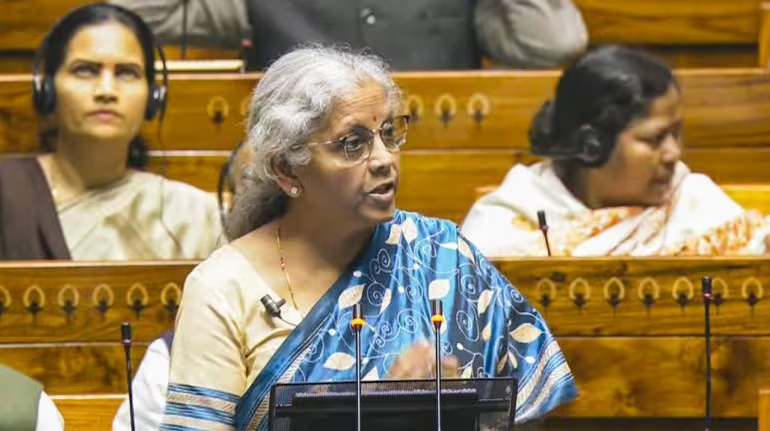
Finance Minister Nirmala Sitharaman recently engaged in a dialogue with students, highlighting the government’s steadfast commitment to nurturing diverse skill sets among the youth. This commitment extends beyond securing employment for young individuals; it aims to create a conducive environment where they can also become job creators, thereby contributing to the overall economic growth of the nation.
During the interaction held at the Andhra Pradesh/Telangana Bhavan, Sitharaman addressed the concerns arising from the ongoing shift in industries due to automation and technology. She acknowledged the transformative impact of artificial intelligence and machine learning on the nature of work, emphasizing the need for the youth to adapt to these changes and seize emerging opportunities.
A focal point of Sitharaman’s discussion was the success of government initiatives such as Mudra loans and low-cost collateral-free credit schemes. These programs have empowered individuals to pursue entrepreneurship and small-scale businesses, ultimately fostering job creation at the grassroots level. Sitharaman’s emphasis on these initiatives underscores the government’s proactive approach towards addressing unemployment challenges and promoting economic inclusivity.
The discourse also touched upon the broader political landscape, with opposition parties like Congress and AAP raising concerns about unemployment during the national polls. In response, both the ruling BJP and Congress have outlined strategies in their manifestoes to boost the manufacturing sector, a key driver of employment generation. Sitharaman reiterated the government’s commitment to this goal, underscoring the importance of manufacturing in driving sustainable economic growth and job creation.
Looking towards the future, Sitharaman discussed the prospects of the Indian economy, particularly in sunrise sectors that hold immense potential for youth employment. She highlighted the pivotal role of the digital economy in shaping India’s future trajectory, emphasizing the need for young individuals to embrace digital skills and innovation.
In addition to economic policies, Sitharaman engaged students in discussions about inheritance and wealth tax, topics that have garnered attention during the election campaign. These discussions reflect the government’s efforts to address socio-economic issues and promote equitable wealth distribution.
One of the notable achievements highlighted by Sitharaman was the exponential growth of digital payments through platforms like UPI (Unified Payments Interface). This growth not only signifies the increasing adoption of digital transactions but also showcases India’s prowess in the digital space on the global stage.
Overall, Sitharaman’s dialogue with students encapsulates the government’s multifaceted approach towards addressing unemployment challenges, fostering entrepreneurship, and preparing the youth for the future economy. By empowering individuals with diverse skill sets and creating an enabling environment for innovation and job creation, the government aims to propel India towards sustainable and inclusive growth.